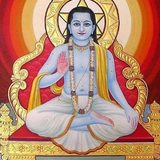
Nimbarka (Śrī Nimbārkācārya श्री निम्बार्काचार्य), was a Hindu philosopher and commentator, known for propagating the Vaishnava doctrine of bhedabheda dvaitadvaita, duality in unity. There is considerable disagreement regarding the dates when Nimbarka lived and taught; according to the Vedic scriptures, he was born in 3096 B.C.E., but modern historical research places him in the thirteenth or fourteenth century. The works attributed to Nimbarka are Vedānta-pārijata-saurabha (a short commentary on the Brahmasutra); Daśa-śloki (Dashashloki), ten verses elucidating his view of the distinctness of jiva (cit, soul), isvara and jagat(acit, matter); and Krsna-stava-rāja (Shrikrsnastavarāja). Nimbarka’s philosophical position is simultaneous duality and non-duality. He defines three categories of existence, God (Isvara), souls (cit) and matter (acit). God (Isvara) exists independently and by Himself, but the existence of souls and matter is dependent upon God. Souls and matter have attributes and capacities which are different from God (Isvara), but at the same time they are not different from God because they cannot exist independently of Him. God is both the efficient and material cause of the universe. Creation is a manifestation of His powers of soul (cit) and matter (acit). His disciplic tradition, the Nimbarka Sampradāya, continues unbroken till today. - from New World Encyclopedia