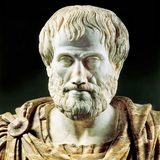
Aristotle
Aristotle was a Greek philosopher and polymath during the Classical period in Ancient Greece. Taught by Plato, he was the founder of the Lyceum, the Peripatetic school of philosophy, and the Aristotelian tradition. His writings cover many subjects including physics, biology, zoology, metaphysics, logic, ethics, aesthetics, poetry, theatre, music, rhetoric, psychology, linguistics, economics, politics, and government. Aristotle provided a complex synthesis of the various philosophies existing prior to him. It was above all from his teachings that the West inherited its intellectual lexicon, as well as problems and methods of inquiry. As a result, his philosophy has exerted a unique influence on almost every form of knowledge in the West and it continues to be a subject of contemporary philosophical discussion. - from Wikipedia
Cited in arguments
- Greek city states had a national identity
- The state is the ideal expression of society
- Monism categorizes the soul and body as one
- Animals do not have souls
- Engaging in research is a part of human nature
- There is no true origin of the first chicken or the first egg
- Art is used for basic human instincts for harmony and balance